

What Exactly is a Reverse Mortgage?
Think of it this way: you've spent years paying into your home. A reverse mortgage lets your home pay you back. It's a straightforward financial tool that's been available in Canada since 1986.
It's a loan secured against your home that gives you access to up to 55% of your home's appraised value as tax-free cash.
The big difference from a regular mortgage? There are no monthly payments (unless you want there to be, it’s up to you).
You keep living in your home, and the loan gets repaid when you eventually sell, move out, or pass away.
How it Works

-
The requirements are pretty simple:
You need to be 55 or older. If you're applying with a spouse or partner, both of you need to be 55+.
The home has to be your primary residence in Canada — the place where you actually live.
You need to own it outright or have good equity built up.
Most property types work — detached homes, condos, townhomes — though it depends on the lender.
Here's what you don't need: there's no income test and no credit score requirement. The loan is based on your home and your age — not your income.
-
Up to 55% of your home's current appraised value. The exact amount depends on your age, where your home is, and the lender. As a general rule, the older you are, the more you can access.
Want a ballpark number? We can give you a free estimate in about five minutes during a quick chat. No commitment needed.
You can try our calculator as well.
-
This is the part we make sure every client fully understands before moving forward — because it's the most important trade-off.
Interest builds up on the outstanding balance over time. That means the amount you owe grows if you don't make any payments. It's compounding interest — the same way your savings grow in a bank account, except in this case it's working in the other direction.
The good news? You can make payments if you want to. Some of our clients pay the interest every month to keep the balance flat. Others make the occasional lump-sum payment. And some choose to make no payments at all. It's completely up to you.
We walk every client through the numbers so you know exactly what to expect — no surprises down the road.
-
The loan comes due when one of three things happens: you sell the home, you move out permanently (say, to a care facility), or the last borrower passes away.
And here's the part that gives people real peace of mind: Canadian law requires lenders to guarantee that you will never owe more than your home is worth when it's time to repay. It's called the No Negative Equity Guarantee. That means if the housing market dips, you and your family are protected.
-
Whatever you'd like — there are no restrictions. Here's what our clients most commonly use it for:
Topping up retirement income so there's more breathing room each month
Paying off an existing mortgage (goodbye, monthly payments!)
Renovating their home — new bathroom, better accessibility, that deck you've been dreaming about
Covering healthcare or in-home care costs
Helping kids or grandkids with a down payment
Travelling, enjoying life, or just having a safety net
Here are some of the situations where our clients find a reverse mortgage most helpful.
-
![A couple walking hand in hand through a forest trail surrounded by tall trees and green foliage.]()
01
"I'm house-rich but cash-poor"
Your home is worth a lot, but your bank account doesn't show it. Sound familiar?
-
![Coastal landscape with large rocky cliffs, ocean waves, cloudy sky, and some greenery in the foreground.]()
02
"I love my home — I'm not leaving"
Downsizing isn't for everyone. Stay put and access your equity at the same time.
-
![An elderly couple smiling outdoors, each holding a purple yoga mat during a yoga session in a greenhouse or garden.]()
03
"I'm tired of mortgage payments"
Use the funds to pay off your existing mortgage and never make another monthly payment.
-
![An elderly couple walks together outdoors on a fall day, with the man's arm around the woman's shoulders and her hand holding his back, surrounded by trees with colorful foliage.]()
04
"I want to help my kids get into a home"
Give your children or grandchildren a financial boost while you're here to enjoy it.
-
![]()
05
"Healthcare costs are adding up"
Cover in-home care, medications, or medical equipment without draining your savings.
-
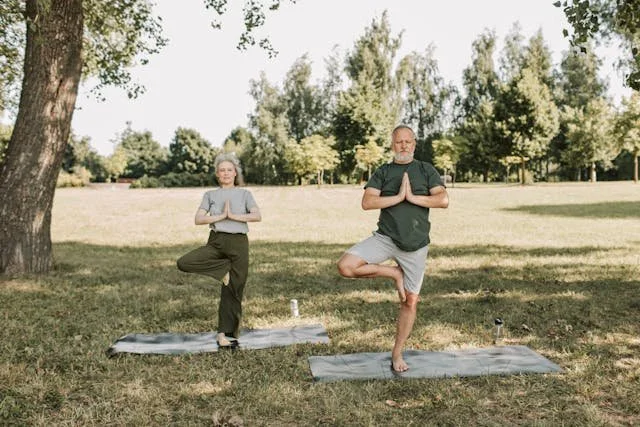
![A man and a woman practicing yoga outdoors in a park, standing on yoga mats with trees in the background, both in a tree pose with hands together in prayer position.]()
06
"I want to age in place comfortably"
Fund the renovations that let you stay in your home safely for years to come.





Let’s Clear up Some Myths.
There's a lot of misinformation out there about reverse mortgages. Here's what's actually true.
-
Nope. You keep full ownership. The lender just holds a charge on the title — exactly the same as a regular mortgage. Your name stays on the deed.
-
Not possible. The No Negative Equity Guarantee means the estate will never owe more than the home sells for. Any leftover equity goes to your heirs.
-
Not at all. Many financially comfortable retirees use reverse mortgages as a smart retirement planning tool — not a last resort.
-
That won't happen. You can stay as long as you want, as long as you maintain the property and keep your taxes and insurance up to date.
-
We encourage transparency. In fact, we welcome family members in our consultations. Better decisions happen when everyone's on the same page.